On this page
Quick answer
An onsen town is a whole experience, not just a bath. Walk the streets in a yukata, rest your feet in a free foot bath, try onsen eggs and steamed buns, and see each town’s famous sights. Even if you don’t bathe in a public onsen, you can enjoy an onsen town fully with your family.
When Japanese people go to an onsen, the bath is only part of the trip. The real pleasure is the whole town: steam rising from the streets, shops selling local specialities, people strolling in cotton robes in the evening.
I was born in Japan and lived there for 26 years before moving to Dubai. This is how I tell friends here to enjoy an onsen town, even if they never set foot in a public bath. For how to bathe in private, see our top 10 ryokan with private onsen.
Walk the town in a yukata
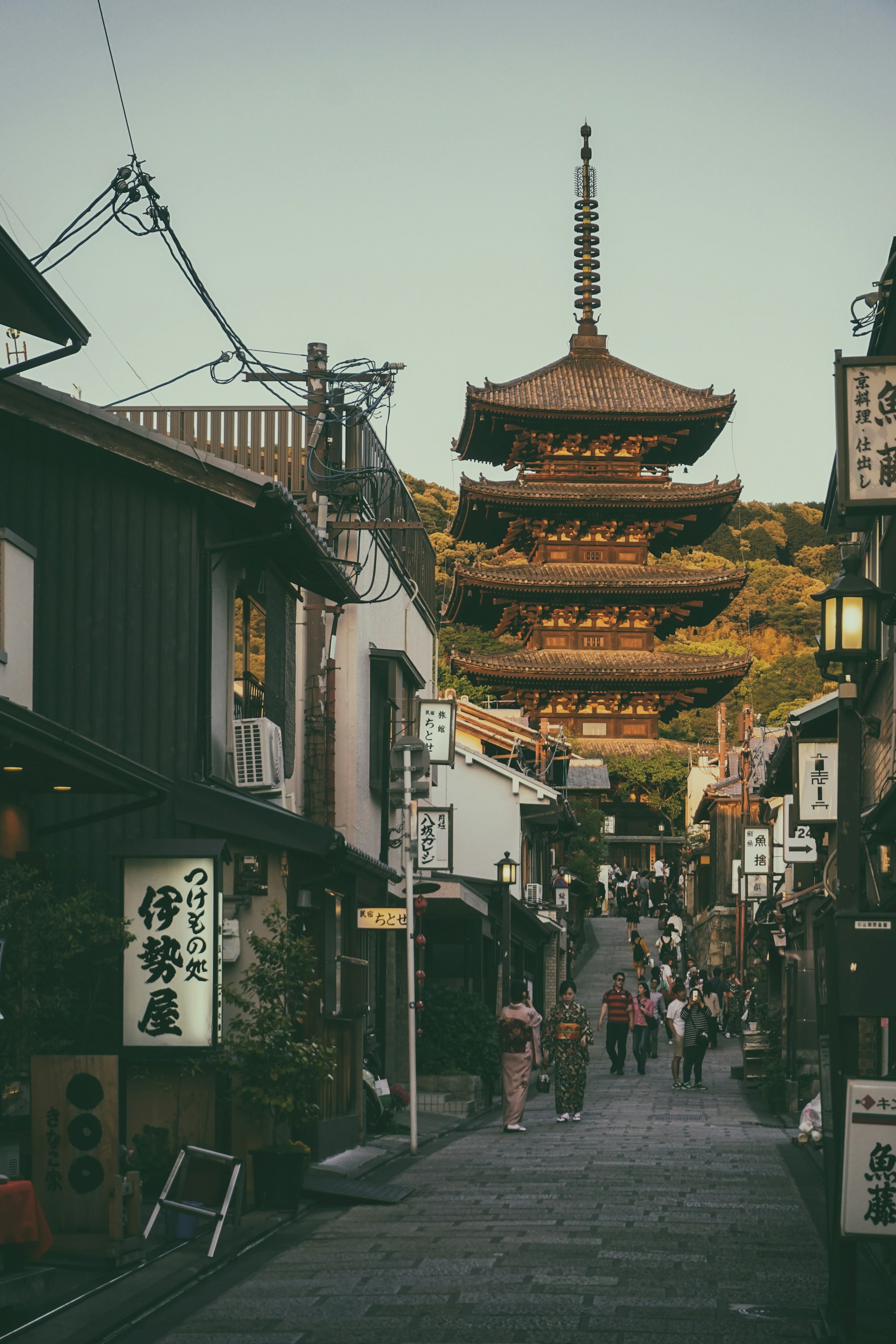
At a ryokan, you will find a yukata, a light cotton robe, in your room. Japanese guests wear it everywhere: to dinner, to the baths and for an evening walk through town.
- Wrap the left side over the right. The opposite way is only used for the deceased, so this one matters
- Use the jacket (haori) in cold weather. Most ryokan provide one in winter
- Wear the sandals or wooden geta that the ryokan lends you for walking outside. Never walk outside in the ryokan’s indoor slippers: they are only for inside the building
Good to know: if you wear a hijab or prefer to stay covered, you can wear the yukata over your own clothes, or simply walk in your usual clothes. Nobody will mind.
Try a foot bath (ashiyu)
Many onsen towns have free foot baths in the street. You sit on a bench, roll up your trousers and put just your feet in the hot water.
- No need to undress, so it is perfect for Muslim families and for anyone shy about bathing
- Bring a small towel to dry your feet
- Ten to fifteen minutes is enough to warm your whole body after a day of walking
Onsen treats to try
Every onsen town has its own local specialities, many made with hot spring water or steam.
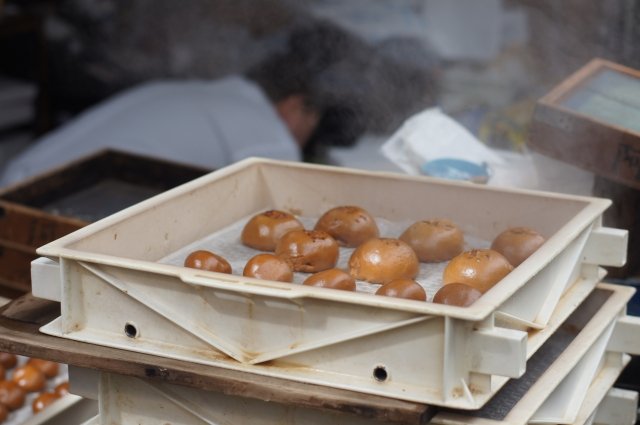
- Onsen eggs (onsen tamago): eggs slowly cooked in hot spring water, with a soft, silky white. They are often served with a dashi sauce, which may contain mirin, so ask for the egg on its own
- Onsen manju: small steamed buns filled with sweet red bean paste, sold warm in almost every onsen town
- Soft-serve ice cream: a favourite after a hot bath, often in local flavours
- Jigoku-mushi (steam-cooked food): vegetables, eggs and seafood cooked in the natural steam of the hot spring. Beppu in Kyushu is the most famous place for it. The seasoning is simple, so it is an easy choice
Halal tip: eggs and plain bean-paste sweets are usually fine, but sauces and some sweets can contain mirin, sake or other animal-based ingredients. If you are unsure, ask the shop, or choose simple sweets. Our guide to whether Japan is Muslim-friendly explains what to look out for.
Japan’s favourite onsen towns and what makes each one special
Every onsen town has its own character. Here is what makes each of our favourites different.
Hakone: a volcanic onsen town close to Tokyo
What makes it special: mountains, a steaming volcanic valley and views of Mount Fuji, all about 90 minutes from Tokyo.
Owakudani is a volcanic valley full of steam and the smell of sulfur. Here, eggs are boiled in the hot spring water until their shells turn black. Japanese people say that eating one black egg adds seven years to your life. They are sold in packs at the Owakudani Kurotamago-kan.
Kusatsu: the town built around a river of hot water
What makes it special: the powerful, strongly acidic water and the Yubatake in the middle of town. Japanese people often call it the king of onsen towns.
In the middle of Kusatsu is the Yubatake, where hot spring water steams as it flows through long wooden channels. It is beautiful at night when it is lit up. Next to it, at the Netsunoyu hall, women in traditional clothes perform yumomi, cooling the hot water by stirring it with long wooden paddles while singing. Shows run several times a day and cost ¥700 for adults. On Sundays and Mondays, you can try yumomi yourself.
Ikaho: the town of stone steps
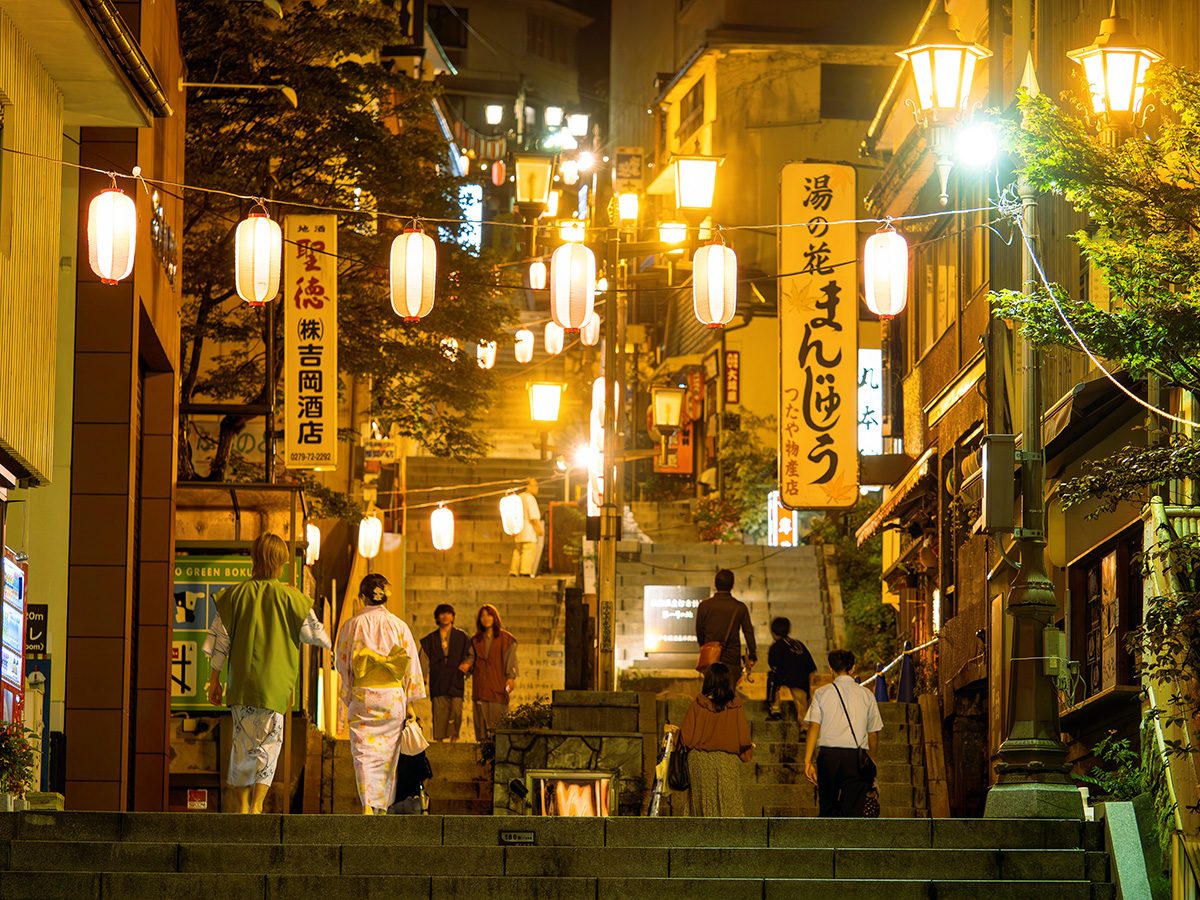
What makes it special: a whole town on one long staircase, with old-fashioned shops and a nostalgic feel, especially at night.
Ikaho is built around a long staircase of 365 stone steps, lined with shops, cafés and old-fashioned game halls. Halfway up there is a free foot bath. Ikaho is also known as the birthplace of the brown yu-no-hana manju, a steamed bun that often sells out before noon.
Arima: one of Japan’s oldest onsen towns, near Osaka
What makes it special: two completely different kinds of water in one town, and narrow old streets about an hour from Osaka.
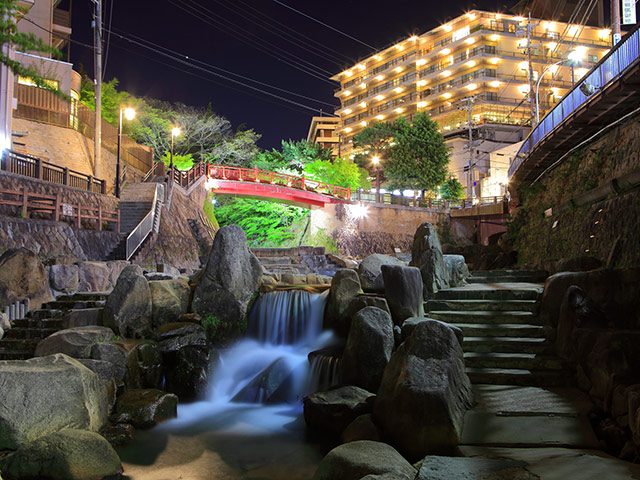
Arima is famous for two kinds of water: the reddish-brown gold spring and the clear silver spring. Walk the narrow streets and try tansan senbei, thin, crisp crackers made with Arima’s naturally fizzy spring water. Some shops sell them freshly baked and still soft.
Fun inside the ryokan
Many onsen ryokan have small, old-fashioned pleasures that Japanese families love. Not every ryokan has all of them, so check when you book.
- Table tennis: the classic onsen game. Playing ping-pong in your yukata after dinner is a favourite memory for many Japanese people. Paddles and balls are usually free to borrow
- A bottle of milk after the bath: cold milk, fruit milk or coffee milk in a glass bottle, drunk in one go with a hand on your hip. Children love it
- Massage chairs: often placed near the baths, for a few hundred yen
- Game corners and shops: retro arcade games, and a shop selling local sweets and souvenirs
- Lounges and foot baths: some ryokan have a lounge with free tea or a foot bath inside the building
A night at a ryokan: what to expect
| Time | What happens |
|---|---|
| Afternoon | Check in, usually from 15:00. Tea and a Japanese sweet are often served in your room |
| Before dinner | Bath time, or a walk through town in your yukata |
| Evening | A multi-course dinner, in your room or a dining room. Ask for halal or alcohol-free food when you book |
| Night | Futons are laid out on the tatami for you |
| Morning | An early bath with the morning view, then a Japanese breakfast |
| Late morning | Check out, usually around 10:00 or 11:00 |
Local tip: tell the ryokan what time you will arrive. Dinner is prepared for a set time, so arriving late can be a problem.
Souvenirs from an onsen town
- Local sweets: onsen manju, tansan senbei and other treats. Check the ingredients for halal needs
- Bath salts and yu-no-hana: minerals from the hot spring, so you can enjoy a little of it at home
- Small crafts: wooden goods, towels and fans with the town’s design
Let a Japanese local plan your onsen trip
Choosing the right onsen town and ryokan is easier with a local. We find ryokan with private baths, ask about halal or alcohol-free meals in Japanese, and plan the trip from Tokyo, Kyoto or Osaka. Start a free chat.
Do I have to bathe to enjoy an onsen town?
No. Many visitors simply enjoy the foot baths, the food, the shops and the evening atmosphere. A foot bath gives you the feeling of an onsen without undressing.
Can I wear my yukata outside the ryokan?
Yes. In onsen towns, walking around in your ryokan's yukata is completely normal. In big cities, people do not usually wear a ryokan yukata outside.
Are onsen eggs halal?
The egg itself is simply cooked in hot spring water. The sauce served with it often contains mirin, so ask for the egg without sauce if you avoid alcohol.
Which onsen town is best for a first visit?
Hakone is the easiest from Tokyo, with lots to see. If you are based in Osaka or Kyoto, Arima is about an hour away.
Is one night enough at an onsen town?
One night is the classic way to enjoy an onsen town. If you go further, such as to Kusatsu in Gunma, two nights lets you relax without rushing.