On this page
Quick answer
Tokyo has several mosques that welcome visitors, and prayer rooms in shopping centres and stations near the main sights. The largest mosque is Tokyo Camii, a short trip from Shibuya. Near Asakusa and Ueno there are smaller mosques, and Shibuya PARCO, Tokyo Midtown in Roppongi and Tokyo Station have prayer rooms you can use between sights.
Last verified: 30 October 2026. Opening hours can change, so check before you go.
Finding a place to pray is one of the first questions Muslim families ask us about Tokyo. The good news: you rarely need to go far. This guide lists the mosques that are easy for visitors to reach, the prayer rooms near the sights you are likely to visit, and how to plan your day around prayer times.
We keep two Google Maps lists with about 150 halal restaurants and mosques across Japan. Get the free lists and save them to your phone before you travel.
Mosques in Tokyo that are easy for visitors
Tokyo Camii (Yoyogi-Uehara, near Shibuya)
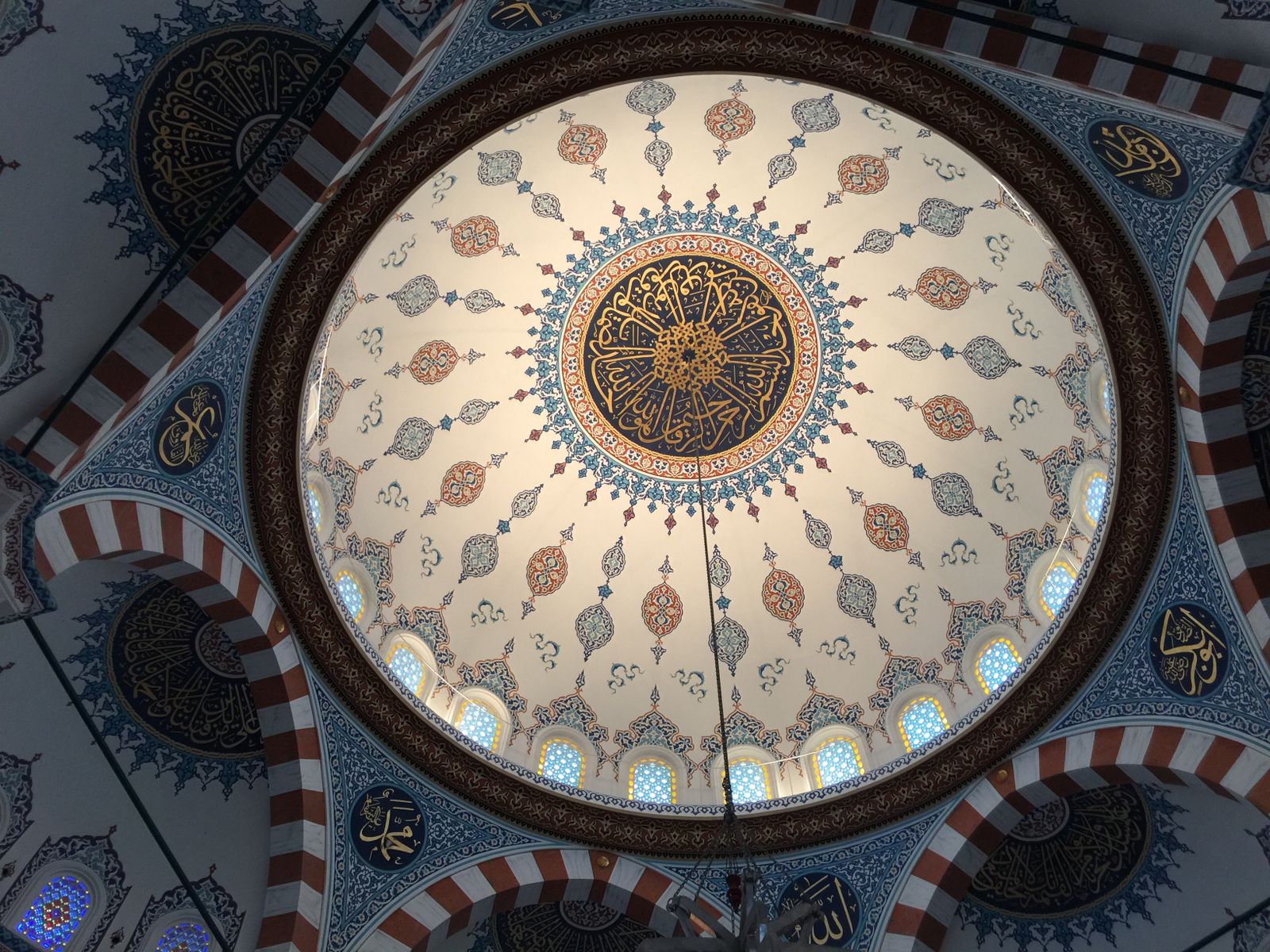
- Japan’s largest mosque, built in the Ottoman style, with room for more than 500 people and water for wudu
- Open daily, 10:00 to 18:00. On Fridays, general visits start at 14:00, but you can join the Friday prayer
- Address: 1-19 Oyama-cho, Shibuya-ku. About 5 minutes on foot from Yoyogi-Uehara Station
- The upper floor of the prayer hall is for women. Women need a headscarf in the prayer hall
- Free guided tours in Japanese on Saturdays, Sundays and holidays at 14:30. Groups of 5 or more visiting at other times should book in advance on the mosque’s website
Masjid Darul Arqam (Asakusa Mosque)
- Near Asakusa and Senso-ji. About 10 minutes by bus from Asakusa Station to the Higashi-Asakusa stop, then a 2-minute walk
- Address: 1-9-12 Higashi-Asakusa, Taito-ku
- Water for wudu is available
Masjid As-Salaam (Okachimachi Mosque)
- Between Ueno and Akihabara. About 2 minutes on foot from Naka-Okachimachi Station
- Address: 4-6-7 Taito, Taito-ku
- Water for wudu is available. Several halal restaurants are nearby, see our halal food in Tokyo guide
Otsuka Mosque
- A well-known mosque in north Tokyo, about 5 minutes on foot from Otsuka Station on the JR Yamanote Line, two stops from Ikebukuro
- Address: 3-42-7 Minami-Otsuka, Toshima-ku
- Separate prayer space for women and an area for wudu. Open daily from early morning to late evening, with Friday prayers
Prayer rooms near the main sights
When you are in the middle of a day of sightseeing, a prayer room in a shopping centre or station is often closer than a mosque.
| Area | Prayer room | Hours | Wudu |
|---|---|---|---|
| Shibuya | Shibuya PARCO, 5th floor (separate for men and women, 4 to 5 people each) | 11:00 to 21:00 (store hours) | Yes |
| Roppongi | Tokyo Midtown, about 3 minutes from Roppongi Station | 11:00 to 20:00 (store hours) | Check on site |
| Roppongi / Azabudai | Azabudai Hills, Tower Plaza, Mori JP Tower 4th floor | 11:00 to 20:00 (store hours) | Check on site |
| Tokyo Station | JR EAST Travel Service Center, near the Marunouchi North Exit | 10:00 to 17:00 | Yes |
| Haneda and Narita airports | Prayer rooms in the terminals | See our airport section | Yes |
For the airport prayer rooms, see the airport section of our halal food in Tokyo guide.
Friday prayer (Jumu’ah)
- Arrive early. Smaller mosques fill up quickly on Fridays, and some people pray in the corridors
- Women: not every small mosque has a women’s area. Tokyo Camii and Otsuka Mosque do
- Plan your Friday around it: for example, Tokyo Camii in the early afternoon, then Shibuya or Harajuku
Visiting a mosque: a few manners
- Dress modestly. Tokyo Camii asks men not to wear shorts, and women to wear long sleeves and a long skirt or loose trousers
- Take off your shoes before the prayer hall, and keep your voice low
- Phone photos are fine at Tokyo Camii, but do not photograph worshippers, and do not take photos during prayer
Prayer times and the qibla
- Prayer times: use a prayer-time app set to Tokyo. In autumn and winter the days are short, so Maghrib comes early, around 16:30 to 17:00 in December
- Qibla: in Tokyo, the qibla is to the west-northwest. Some hotels can lend a prayer mat or tell you the direction
How to fit prayers into a day in Tokyo
| Day | Sights | Where to pray |
|---|---|---|
| Shibuya and Harajuku | Shibuya Crossing, Meiji Jingu, Harajuku | Tokyo Camii, or Shibuya PARCO |
| Asakusa and Ueno | Senso-ji, Ueno Park, Ameyoko | Asakusa Mosque, Okachimachi Mosque |
| Roppongi and Tokyo Station | Tokyo Midtown, Azabudai Hills, Imperial Palace | Tokyo Midtown, Azabudai Hills, Tokyo Station |
| Ikebukuro | Sunshine City | Otsuka Mosque, two stops away |
For more ideas, see our Tokyo guide and is Japan Muslim-friendly?.
Planning a trip to Japan?
We plan private trips to Japan for Muslim families and couples from the Gulf. Tell us your dates and who is travelling, and we will send you a plan.
Plan my Japan tripOr see our Japan tour packages from Dubai.
Can non-Muslims visit Tokyo Camii?
Yes. Tokyo Camii is open to visitors every day from 10:00 to 18:00. On Fridays, general visits start at 14:00.
Is there a mosque near Shibuya?
Tokyo Camii is in Yoyogi-Uehara, a short train or bus ride from Shibuya. Shibuya PARCO also has a prayer room on the 5th floor.
Is there a mosque near Asakusa?
Yes. Masjid Darul Arqam is in Higashi-Asakusa, about 10 minutes by bus from Asakusa Station.
Can women pray at mosques in Tokyo?
At Tokyo Camii and Otsuka Mosque, yes, with a separate area for women. Some small mosques have no women's area, so the prayer rooms in shopping centres can be easier.
Are there prayer rooms at Tokyo's airports?
Yes. Both Haneda and Narita have prayer rooms. See the airport section of our halal food in Tokyo guide for where they are.