On this page
- Before you pick any date, rule out two things
- ① Japan’s own public holidays
- ② Rainy season (梅雨) and typhoon risk
- Once you’ve ruled those out, choose your season by what you want to experience
- Spring — mid-to-late April, before Golden Week begins
- Early-to-mid summer — late July into the first days of August
- Autumn — mid-to-late November, just before the peak foliage weekend
- Winter — early-to-mid January through early February
- If two seasons still look equally good
- How to start planning around your actual dates
- Frequently asked questions
Quick answer
The single most reliable rule is to avoid Japan’s own domestic holiday weeks — Golden Week (April 29 to May 6, 2026), Obon (roughly August 8 to 16), and New Year (December 29 to January 3) — when tens of millions of Japanese travel inside the country and both crowds and prices spike regardless of season. Outside those windows, timing comes down to your children’s ages, trip length, and booking flexibility: mid-to-late April before Golden Week, or late November, give cherry blossom or autumn beauty with shorter queues than the true peak weeks. January after New Year through early February suits families with children under seven, and a well-planned summer trip outside Obon week works better than most guides suggest.
Every family planning a trip to Japan eventually asks the same question: when should we go? Search “best time to visit Japan” and you’ll get the same answer everywhere — cherry blossoms in April, autumn leaves in November. Both are true. But that advice is written for a general audience, not for a family flying eight hours from Dubai or Riyadh with children who tire after lunch, or grandparents who need a slower pace and can’t stand for long in a queue.
I’ve planned trips for enough Gulf families now to know that the question they’re really asking isn’t “when is Japan prettiest” — it’s when can we actually enjoy this without the trip becoming a battle of patience. Those are two different questions, and the answer to the second one changes everything about how you should plan.
Before you pick any date, rule out two things
Most “best time to visit Japan” guides only talk about weather. From planning enough trips for Gulf families, I’ve learned there are two separate things worth ruling out first — and once you have, almost any remaining week works well for a family.
① Japan’s own public holidays
Japan has three windows when tens of millions of Japanese people travel inside their own country, on top of whatever international tourists are already there. If your dates land inside one of these, the season barely matters — trains sell out weeks ahead, hotel prices double, and even quiet neighborhoods fill up.
The three windows to build your dates around, not into: Golden Week (April 29 – May 6, 2026), Obon (roughly August 8 – 16), and New Year (December 29 – January 3). In 2026 there’s also a rare “Silver Week,” September 19 – 23 — the first one since 2015.
Golden Week catches Gulf families off guard most often, because generic advice keeps pointing people toward “late April” for cherry blossoms without mentioning what comes right after. In 2026 the core public holidays run from May 3 to May 6, but Showa Day on April 29 kicks the period off, and most Japanese workers also take April 30 and May 1 as leave — so in practice, the last two or three days of April are already inside it. Obon in mid-August isn’t even an official public holiday, but it’s when most private companies close and the shinkansen and expressways fill with people going home to family, so it behaves like one. New Year is different again: many restaurants, shops, and smaller museums close from around December 29 to January 3, so a “quiet winter” trip planned into that exact window can mean closed doors rather than empty streets.
None of this means avoid Japan during these periods entirely — plenty of families do visit during Golden Week and have a wonderful time. It means go in with your eyes open: book everything months ahead, expect higher prices, and don’t expect the off-peak experience the season alone would otherwise suggest.
② Rainy season (梅雨) and typhoon risk
The second thing most guides skip entirely. Tokyo, Kyoto, and Osaka sit inside Japan’s rainy season (梅雨, tsuyu) from roughly June 7 to July 19 most years — not nonstop rain, but stretches of humid, overcast days with sudden downpours that can turn an outdoor-heavy itinerary into an indoor scramble on short notice. Typhoons are a separate, later risk: the season officially runs June through October, but activity peaks from late August into September, when Japan sees an average of a few storms approach each month.
The window most itineraries miss entirely: late July through the first days of August, after the rains have cleared and before Obon’s crowds or the worst of typhoon season arrive.
Once you’ve ruled those out, choose your season by what you want to experience
This is the part most guides get backwards — they tell you the “best” month before asking what you actually want your family to do that week. Once Japan’s holidays and the rainy/typhoon windows are off the table, the honest answer is that every remaining season has a genuine reward attached to it. Here’s what each one actually gives you.
Spring — mid-to-late April, before Golden Week begins
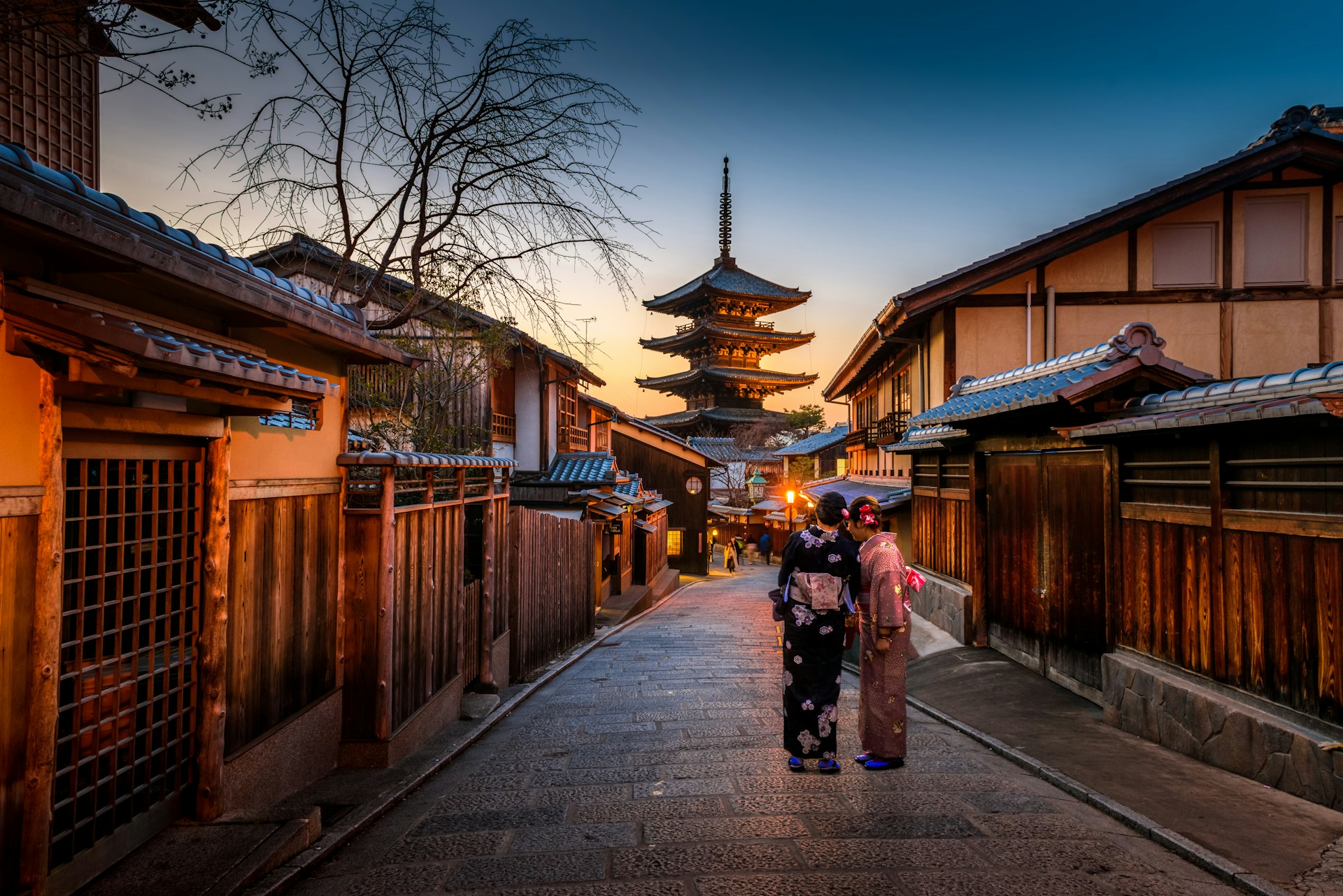
Cherry blossoms, without paying the full price in crowds. Once the main cherry blossom rush clears Tokyo and Kyoto but before Golden Week begins on April 29, you get close to the same visual beauty with meaningfully shorter waits. During peak cherry blossom week itself, popular spots in Kyoto’s Higashiyama district can mean forty minutes of queuing before you even reach the temple gate — and with children under ten, that forty minutes becomes the story they tell about the day, not the one you wanted them to tell. The crowds also concentrate on a handful of famous names — Kiyomizu-dera, Fushimi Inari’s main gate, Arashiyama’s bamboo grove at midday — and a lesser-known temple in the same district often gives eighty percent of the beauty with a fraction of the wait. If you want to cross-check bloom timing yourself rather than relying on a blog’s estimate, the Japan National Tourism Organization publishes an official seasonal events calendar updated every year.
Early-to-mid summer — late July into the first days of August
Fireworks festivals (花火大会), warm evenings, and — because most guides steer families away from summer entirely — genuinely better availability. Private experiences that get booked out months ahead during cherry blossom season often still have availability in July: a private tea ceremony in a machiya townhouse, an afternoon at a digital art museum, air-conditioned private transport between stops instead of figuring it out with taxis on the day. A warm evening by a river with your kids watching the first bursts of a hanabi display is a completely different kind of memory than a spring temple queue. Keep the trip indoor-and-early-morning in rhythm rather than fighting the heat with an all-outdoor schedule copied from a spring itinerary, and plan to be done before Obon crowds begin around August 8.
Autumn — mid-to-late November, just before the peak foliage weekend
Autumn leaves (紅葉) with the same crowd logic as spring: arrive just ahead of the single most crowded foliage weekend, and you get most of the color with a fraction of the wait. This window also tends to have the most comfortable walking temperatures of the whole year, which matters more than it sounds like when you’re covering ground with tired kids.
Winter — early-to-mid January through early February
The quietest months for international travel, and the most forgiving pace for families with children under seven: shorter daylight hours mean hotel check-in flexibility and restaurant seating without a strict turn-time are the norm, not the exception. A father I worked with last winter mentioned, almost as an aside on our last day, that it was the first trip in years where his kids weren’t visibly exhausted by day three. That wasn’t luck — it’s what a three-stops-a-day itinerary with a two-hour afternoon break does for a family. The one exception inside this window is the turn of the year itself (see ① above); once the New Year closures lift, early-to-mid January is the actual start of the sweet spot. Winter is also, honestly, the easiest season to combine with a private onsen ryokan stay — a hot spring inn with an in-room private bath, which matters for families who want to keep modesty and comfort together rather than choosing between them.
If two seasons still look equally good
Let trip length and your children’s ages break the tie. A family with two full weeks and teenagers can chase cherry blossoms and treat the crowds as part of the experience. A family with five days and a four-year-old is almost always better served by winter or the late-July window and an itinerary with fewer, deeper stops. There’s a cost side too — if you’re weighing a group package against building your own private trip, timing changes the math, since private planning tends to pay off most in the seasons where availability is tight.
Two more things worth settling before you lock in dates, not after: if halal dining is a non-negotiable rather than a nice-to-have, our halal restaurant map for Tokyo is worth ten minutes of reading before you choose where to stay, and if you haven’t already checked visa requirements for UAE residents, do that before you commit — processing times can occasionally nudge a trip by a week or two.
How to start planning around your actual dates
If you already have travel dates roughly in mind, the more useful question isn’t “is this the best time” but “how do we make the most of this specific window” — and whether those dates happen to fall inside Golden Week, Obon, or New Year. Send your dates and the ages of everyone traveling on WhatsApp, and I’ll build the itinerary around what actually works for your family — including whether a full seven-day itinerary or something shorter and more focused makes more sense for the season you’ve picked.
Frequently asked questions
Which Japanese holidays should we avoid when planning a trip?
The three windows to build your dates around, not into, are Golden Week (April 29 to May 6, 2026), Obon (roughly August 8 to 16), and New Year (December 29 to January 3), when domestic travel inside Japan peaks regardless of season. In 2026 there's also a rare Silver Week, September 19 to 23.
Is spring or autumn really the best time for a family trip to Japan?
Not necessarily, and spring needs extra care around Golden Week. Spring and autumn are Japan's most crowded seasons, and long queues are often harder on young children than the weather is. Mid-to-late April, before Golden Week begins on April 29, and late November tend to offer similar scenery with noticeably shorter waits than the true peak weeks.
Is summer a bad time to visit Japan with a family?
Summer humidity in Tokyo and Osaka is real, but a summer itinerary built around indoor and shaded experiences, with private air-conditioned transport between stops, can work well outside Obon week (roughly August 8 to 16). Private experiences that get booked out months ahead in spring often still have availability in July.
What's the best time for a family with toddlers or young children to visit Japan?
Early-to-mid January, once the New Year closures lift, through early February tends to suit families with children under seven best. The quieter season allows for a slower daily pace, with fewer stops per day and longer breaks between them.
How many days do we need for a family trip to Japan from Dubai or Riyadh?
Most Gulf families travel for five to seven days. A well-paced route balances Tokyo, Kyoto, and one additional stop without over-packing the days — the right length depends on your children's ages and how much flexibility you want.